Ever considered adding an engineering minor? For non-engineering students, adding technical skills may improve the chances of landing that first big job out of college.
“The minor in Engineering Management has long been associated with increased probability of landing a job by graduation,” said Cynthia Paschal, senior associate dean for undergraduate education, adding that the Engineering Management minor does not have strict STEM prerequisites. Paschal points out that minors often focus on real-world applications and showcase the creative, collaborative, and innovative aspects of engineering, making the minor feel relevant and valuable.
An engineering minor can be useful for majors in other schools by demonstrating a diverse skill set and providing a deeper understanding of a related field. A relevant minor can create a more well-rounded candidate and prepare students for specific career paths that combine technical and business skills.
Elisa Ajamian, a senior from San Diego, majoring in Engineering Science, values the focused expertise in project management and financial literacy in the engineering management classes. “I also feel that the classes are a nice change from my engineering science classes while providing an opportunity to diversify my skills.”
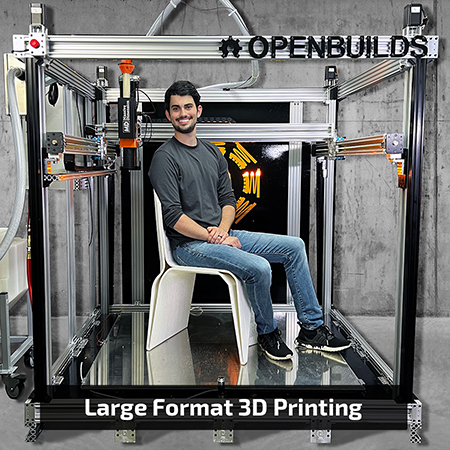
Pursuing a minor in the School of Engineering, such as Digital Fabrication, equips students with hands-on skills that complement their core studies and boost their job readiness—preparing them to excel in today’s technology-driven workforce, said Maddie Humbert, director of the Office of Academic Services for the school. The Digital Fabrication minor is open to students from all four Vanderbilt undergraduate schools. Designed for students in traditional engineering disciplines as well as those who study business, social sciences, public policy, and even musical arts, the curriculum teaches students how computer-controlled manufacturing (3D printing) is revolutionizing product creation. “Most importantly, this minor will allow students to design and realize their product ideas through the equipment in the Digital Fabrication Lab,” David Florian, assistant professor of the practice of Chemical and Biomolecular Engineering and DFL leader.
Yiorgos Kostoulas, director of the Division of Engineering Science & Management, said the engineering management minor is consistently popular with students. “It offers business skills for a technology-related career.”
“Another point that many students don’t realize is that they can double count credits for a minor,” Kostoulas said. “They can take courses for part of their degree and declare the ENGM minor without taking anything extra.”
“Through the ENGM minor I was able to get Certified Associate in Project Management (CAPM) certified,” Ajamian said. “I have learned so much about real-life experiences from amazing professors, which is arguably more important than a homework assignment.”
“VUSE minors offer students the opportunity to concentrate their electives in a specific area that provides a credential on their transcript that is attractive to employers as each provides recognizable value,” said Paschal, also an associate professor of biomedical engineering and radiology and radiological sciences.
A minor consists of at least five courses of at least 3 credit hours each. If all designated courses are completed with a grade point average of at least 2.000, the minor will be entered on a student’s transcript at the time of graduation.
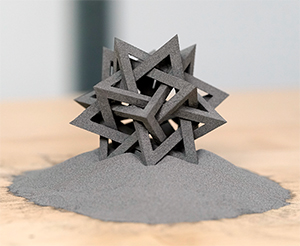
Engineering minors offered are:
- Digital fabrication
- Electrical & computer engineering
- Energy and environmental systems
- Engineering management
- Environmental engineering
- Materials science and engineering
- Nanoscience and nanotechnology
- Quantum Information Science & Engineering (administered by the College of Arts and Science)
Engineering Focus Areas—or mini minors—can be valuable additions, too. They typically require nine credit hours and students can declare a maximum of three focus areas.
Focus Areas offered are:
- Aerospace
- Biomolecular Engineering
- Engineering Communications
- Human Computer Interaction
- Materials Processing
- Microelectronics
- Nanotechnology
- Product Development
- Risk, Reliability, and Resilience in Engineering
- Robotics
- Strategic & Technical Consulting
- Technology Entrepreneurship
“Students interested in declaring a focus area must do so before the start of their final semester at Vanderbilt,” Paschal said. “Successful completion of a declared focus area also will be designated on a student’s transcript upon graduation, but students must remember to formally declare it.”
Registration for spring 2026 undergraduate classes is open until 11:59 p.m. CDT Friday, Nov. 14. Open enrollment (add/drop) period for spring classes begins Monday, Dec. 1, 2025, and ends Wednesday, January 14, 2026.
Contact: brenda.ellis@vanderbilt.edu